
Cigars, flamboyant clothes, antique cars and colorful cartoon houses. These are the images that my brain conjures up when I think of Cuba. Its streets of poverty interlaced with a beautiful culture make it a truly unique country.
But what about its coffee? I want to discover how to make Cuban coffee without an espresso machine. Let's delve into the coffee world of "the country that time forgot". How did the Cubans even make their coffee before espresso makers hit the shops?
The Origins and Processing of Cuban Coffee
The Cubans take their coffee as an intense shot of caffeine. They are serious fans of the espresso and they call it the "Café Cubano". Since its birth in Cuba, the Cuban coffee has become popular in many Latin countries. The people of Miami are also big advocates for the Café Cubano!
Cuban coffee is no new player to the market. It has been growing for over two centuries and Cuba can export the coffee beans to other countries. Cuban coffee tends to be organic and thanks to the ideal climate, it's good quality too.
Where is it grown?
A major region for growing coffee sits at the eastern end of Cuba in some mountains. The Sierra Maestra Mountains boasts fertile, reddish-brown soils and a great climate. An impressive 92% of Cuba's total coffee is grown here. These factors combine to make a good growing location and to eliminate any need for chemical fertilizers.
Harvesters hand-pick the ripe beans when they're ready. As the beans grow on steep terrain, it's difficult to use machinery to do the job. It's also the way things have been done since the beginning. Why fix something that isn't broken?
Coffee farmers transfer the picked beans to large sacks and then throw them over the back of a mule. The mule carries the bags to drying areas for processing.
How is it processed?
The Cuban coffee beans are generally grown by small family farms, rather than large commercial companies. The island of Cuba produces both Robusta and Arabica beans.
Roasters process the beans using a drum roaster, but this takes a lot of skill. The expert roaster relies on just his eyes, ears and smell to determine when they're fully roasted.

The History of Cuban Coffee
Year | Event |
|---|---|
1748 | Jose Antonio Gelabert delivered the first coffee plant to Cuba. |
1791 | French colonists arrived in Cuba and made some changes to coffee production. This happened during the Haitian Revolution and those arriving in Cuba were fleeing the abolition of slavery. They showed Cuban farmers how to better produce their coffee. Over the following 200 years, coffee became one of Cuba's cultural stamps. Generally, most coffee drinkers consumed at least two cups a day. Cuba was a major coffee exporter for Spain, providing 18,500 tons of coffee per year. The beans were an important part of the country's economy. |
1950's | Cuba was at the height of its coffee exporting, and the results were valued at over $21 million. This established coffee as an even more important part of Cuban life. |
1959 | Prime Minister Fidel Castro took control of coffee production. Instead, the island turned its attention to other staple Cuban goods, like cigars and sugar cane. Coffee production slowed down substantially. Havana once housed over 150 cafes and many had to close down. In the space of 50 years, Cuba went from producing 60,000 tons of coffee to around 6,000 tons. Despite the decrease in production, coffee consumption continued to rise. |
1962 | The government developed a coffee rationing system. Even to this day, regular commodities are rationed in some parts of Cuba. Residents will receive tokens and head to the shop to trade them in for sugar, bread, and other foods. In 1962, each person was allowed 4 oz of coffee each month. In order to bring more coffee to people, Café con chicaro was invented. This translates to "coffee with chickpeas" and is exactly as it sounds. The toasted chickpeas combined with ground coffee give a bitter and earthy taste. |
2003 | Cuba began exporting organic coffee to countries such as Europe and Japan. Despite this, coffee remained a fairly insignificant export for Cuba. Sellers are able to trade organic coffee for 40% more than regular coffee. |
How to Make Cuban Coffee
Cuban coffee is almost as unique as the country it comes from. It takes dark roasted espresso that usually gets brewed directly onto sugar. An alternative is to mix the sugar granules in with the coffee grounds as they're extracted.
The idea behind this unusual process is simple. Mixing in the sugar causes the sucrose to break down and create a new, sweeter flavor.
Although Cuba remains a traditional country, sometimes we just don't have the time to honor those traditions! If you have the equipment, let's look at how to make Cuban coffee with an espresso machine.

You will need:
- Medium to dark roast coffee beans (1 shot per cup)
- Sugar (1 tbsp per cup)
- Water (your espresso machine might dispense this anyway)
- Coffee pitcher
- Espresso machine
The Method |
|---|
Prepare the coffee. Your espresso machine might have an inbuilt grinder. If not, purchase ground Cuban coffee beans or grind them yourself beforehand. Add the grounds to the filter basket. |
Add the sugar. Put sugar into your coffee pitcher. Use as much as you like. This all depends on how sweet and how frothy you want it. |
Mix it up. Allow the brewed coffee to pour into the pitcher over the sugar. Place the steaming wand into the bottom of the coffee pitcher and turn it on. This mixes the coffee with the sugar granules, saving you some manual labor. Slowly pull up the steaming wand to create foam. |
How to Make Cuban Coffee Without an Espresso Maker
You may prefer to know how to make Cuban coffee using the most authentic method. Most Cubans use a stovetop moka pot to brew their coffee at home.

You will need:
- Medium to dark roast ground coffee beans (1 shot per cup)
- Sugar (1 tbsp per cup)
- Hot water
- Moka pot
- Espresso or demitasse cups
- Mixing cup
The Method |
|---|
Make the coffee. Fill the moka pot with your coffee grinds. Don't tamp the coffee, but level it off with your finger. Fill the bottom reservoir with hot water and place on low to medium heat. As soon as the coffee brews, remove it from the heat. |
Make the sugar mixture. Place your sugar into a mixing cup. Add 1 tsp of brewed coffee to the sugar and whip aggressively. You should whip this for 2-3 minutes to get it nice and foamy. The color should be creamy and you can add more coffee if you need to. |
Bring it all together. Add the remaining coffee from the moka pot into your mixing cup. Mix it up to dissolve the sugar and watch the foam rise to the top. Pour it into your espresso cups and serve to friends! |
Cubans drink coffee in order to be social and relaxing. Cuban coffee isn't intended as a grab-on-the-go drink, when you're on the subway and late for work!
How Does Cuban Culture Affect Coffee Drinking?
The people of Cuba are a social bunch. They are welcoming to strangers and love to spend time with family and friends. They view drinking coffee as a highly social activity. They will often invite neighbors and friends over to share a cup of coffee and discuss local news.
If people in the community are having a large gathering, they have a coffee for that too! They will serve a large glass of coffee called a "Colada" and offer small cups to their guests. One social activity is to dip the famous Cuban cigar lightly into one of the cups before lighting it.
Traditionally, you should drink Cuban coffee at breakfast time. People in the community see coffee as a way to tackle the new morning! Pair it with a freshly baked Cuban roll for a truly Cuban way to start the day!
What Else Should we Know About Cuban Coffee?
- There used to be strict trade rules, restricting trade between Cuba and America. When we brew Cuban coffee in the US, they are usually from Brazilian or Colombian coffee beans. The name "Cuban coffee" refers to the preparation method.
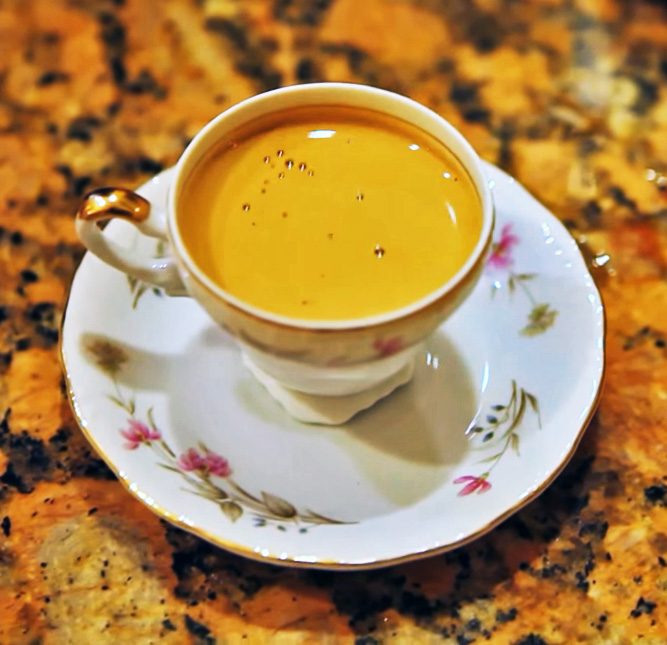
- When made properly, Cuban coffee is a sweet, foamy cup of deliciousness. The thick foam comes from the melted sugar and gives an aromatic and syrupy hit.
- If you're not a fan of the intense espresso, there are some other types of Cuban coffee. You can try the "Cortadito" which translates to "small cut". This is a regular shot of Cuban coffee with some added steamed milk.
- The layer of thick foam is called the "espuma". See, you can learn Spanish and learn about Cuban coffee all at once! The more sugar you use, the thicker the espuma layer and the lighter the coffee.

Where to buy Cuban coffee?
The Cuban espresso is a strong coffee. It's high in caffeine and has a powerful taste! Sounds like something you'd be interested in? Luckily, you can buy the drink in the states, thanks to the influence of the 1.4 million Cuban Americans that reside there.
If only the most superior will do, you'll find the best Cuban coffee in Miami. In fact, you can see this list of cafes that sell Cuban coffee for the top picks of the bunch.
Looking to the rest of the world, Cuba is able to export freely to many other countries. It exports most of its goods to China, Spain, and The Netherlands.
The bottom Line
With coffee as strong as its cigars, the Cuban culture is certainly a powerful one. The people of Cuba see coffee drinking as a way to take time out of a busy day and gossip with friends. If a host doesn't own a moka pot and doesn't offer some Café Cubano, they're not much of a host!
The Cuban coffee industry has gone through many struggles. The conflict with the US was a major roadblock for the economy and coffee export took a backseat to other goods. Now that rules have been modified, the US could see a surge in Cuban coffee.
That's great if you love your coffee strong, thick and sugary. Even if that's not to your taste, why not take some tips from the Cubans? Invite over your friends and treat them to some home-brewed coffee. Show them you know how to make Cuban coffee and how to drink it!
