
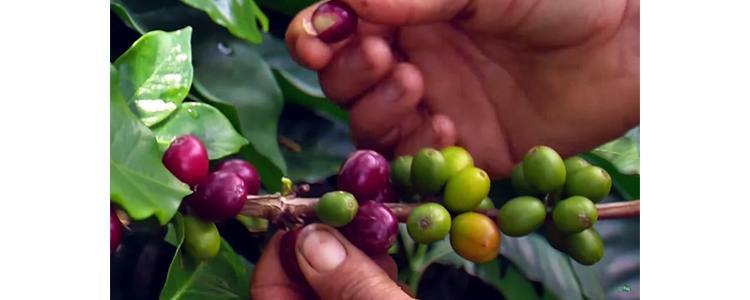
Columbia is the biggest coffee producer in South America, growing only the finest varieties of coffee. Colombian coffee is known to offer a superior quality, so you can be sure you're getting the good stuff when you buy the beans!
You've heard of Arabica coffee, right? Colombian beans are a type of Arabica beans and are also known as "Washed Arabica".
Colombia boasts the third highest coffee production in the world. So, what makes this region of Colombia such a haven for growing coffee plants?
How is Colombian Coffee Produced?

For such a high-quality cup of coffee, it's important that farmers get the growing conditions just right. The climate and the environment have to be Perfecto! (As they say in Colombia.) When production is done well, consumers get that well-balanced Colombian coffee taste they expect.
The Colombian Andes Mountains have been called "the richest and most diverse region on earth" by Conservation International.
Most of the coffee is cultivated in the Colombian coffee growing axis region, also known as the Coffee Triangle. The growing region sits between the cities of Cali, Medellin, and Bogota.
The coffee is grown at high altitudes for a denser bean and is carefully hand-picked and wet-processed. Coffee plants are grown in the shade and can reach up to around 4 feet in height.
The growing system in Colombia involves coffee plants being grown on small peasant holdings. These small producers wet-process the coffee on their farms and then deliver it to collection points. Eventually, mills operated by the Colombia Coffee Federation pick up the coffee. They then sort it and grade it to strict standards.
As I've already mentioned, we're talking about a type of Arabica coffee bean that is also known as "Washed Arabica". The washing procedure is to help purify the beans and also to reduce the acidity. What's the result of all of this extra effort? A richer, smoother taste and a stronger aroma.
The coffee is sold as whole beans and most of it is exported to America, Germany, France, Japan, and Italy.
History of Colombian Coffee
In 1790, the coffee plant reached Colombia, but the country first began growing coffee beans on a commercial scale during the twentieth century. The first coffee crops were grown in the eastern part of Colombia and the first bags were exported from the Cucuta port.
The very first international shipment went to the United States in 1835.
When the world economy was progressing well during the late 19th Century, Colombia saw an opportunity for growth. Colombian landowners could take advantage of the international markets and the country began to export many different commodities. Tobacco, leather and alive cattle were some of the major markets but production gradually fizzled out.
The large coffee estates were also affected when the Thousand Days War made it impossible to maintain their farms. That was when the transformation began. Smaller coffee estates took over as the lead in the development of Colombia's coffee industry. There are now over 500,000 farms spread over the region.
Coffee production has a great impact on the environment in Colombia. It helps to prevent soil erosion and can protect unique species living in the area. Colombia's economy is improving with the rise in global coffee prices, and farmers in the industry are benefitting from this.
What does Colombian Coffee Taste Like?

Coffee can have a different flavor depending on where it is grown. So, Colombian coffee will taste different from Vietnamese coffee. Differences depend on the growing conditions, climates and processing methods. How can we identify our coffee as coming from Colombia?
The best Colombian coffee is some of the most loved in the world! Colombia consistently produces some of the finest coffee beans - and produces a lot of them!
The flavor is described as having a strong caramel sweetness with some nutty undertones. The acidity is nice and mellow and the drink has a medium body. Of course, smell is a huge part of how something tastes, and the aroma is sweet with a hint of cocoa.
The beans are commonly used worldwide and because of this, some people find the flavor too mild. The beans are fairly priced and often used as a base for different blends.
10 Fun Facts about Colombian Coffee

Colombian coffee beans are low in caffeine content and acidity. |
After Vietnamese and Brazilian coffee, Colombia produces the most coffee in the world each year. It produces about 12% of the world's total coffee production. |
You can identify the standard of your coffee by its grade. "Supremo" is the highest grade, followed by "Extra". The two are often combined into a grade called "Excelso". |
Growing altitude: 1200-2000 meters above sea level. |
Harvest period: September-December. |
Some of the finest coffees come from the South of Colombia, in a region called Narino. |
It is a popular choice for espressos! The mild Colombian coffee taste and good price make it an ideal option. The beans can be roasted dark and don't turn too bitter. |
The Colombian Coffee Federation (FNC) is considered the most successful coffee federation, with over 60 years' experience. |
11 million bags of coffee are exported from Colombia every year. |
Most Colombians drink "tinto". This translates to "ink" and actually means "black coffee". It is only occasionally served with milk but usually gets pre-sweetened. The best quality beans are exported, so the beans left in Colombia are usually inferior, with a strong bitter taste. |
Types of Colombian Coffee
- MAM: This is an acronym for Medellin, Armenia, and Manizales. MAM are three regions in which the coffee is grown and are also some of its most distinguished varieties. The three types are often marketed together to simplify large coffee contracts.
- Medellin Supremo: Can be compared to Jamaican Blue Mountain Coffee, another superior variety. The main difference is that Medellin Supremo offers a higher level of acidity.
- Cucuta Coffee: This type of coffee gets shipped through a port in Venezuela, though is grown in Colombia. Cucuta coffee has a rich acidity and medium body, with the occasional fruity hint.
- Bucaramanga Coffee: A variety that is known for its low levels of acidity. It is well-balanced with a full, complex flavor.
The Bottom Line
The United States has long understood the quality and excellent flavor that coffee from Colombia can provide. We first got the taste for it in 1835 and haven't looked back since!
The coffee export market has provided Colombia with great economic and environmental benefits. It has grown to become one of the world leaders in coffee production, specializing in Arabica beans.
Because of its mild flavor, diversity and wide availability, it is often the drink of choice for espressos. Do you take yours "tinto" like the Colombians, or do you prefer to create gourmet drinks with your coffee?
