
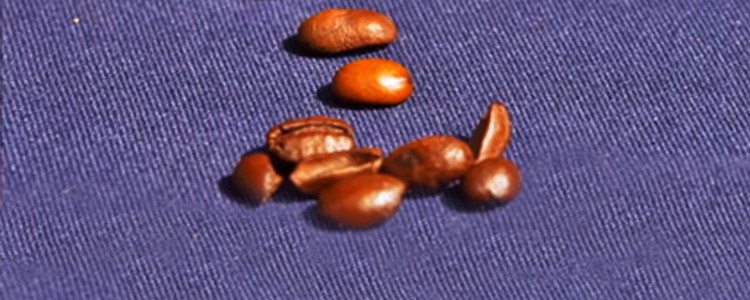
Blue Mountain Coffee, or Jamaican Blue Mountain Coffee, is a decadent luxury you might be lucky enough to have in your kitchen cupboards!
As one of the most expensive coffees in the world, it has been a victim of cheap imitations. When buying real Blue Mountain Coffee, you can be sure that you're paying for quality. But what makes it so good?
Let's look at the facts about one of Jamaica's most prized crops and discover which country indulges the most.
Where is Blue Mountain Coffee (BMC) Grown?

Often, when you want to find out where something comes from, the clue is in the name! This is most definitely the case for Jamaican Blue Mountain Coffee ... You don't need three guesses to figure it out!
Blue Mountain Coffee beans are, of course, grown in the Blue Mountains of Jamaica. The Blue Mountains are located between Kingston and Port Antonio. They are some of the highest mountains in the Caribbean and have a cool climate, with high levels of rainfall. It is also the highest spot in the country of Jamaica.
The mountains are 85% shaded by forest, which is a perfect environment to grow coffee. The shade, climate, and altitude combine to offer growing conditions for the best possible coffee beans.
The growing of the beans is monitored by the Coffee Industry Board of Jamaica. Its name is a globally protected certification mark. This means that only certified coffee can be labeled as BMC. Despite this, many shops sell cheaper imitations because the real thing is unaffordable for many people.
The Board inspects the quality of each barrel of beans, to check that the size and color are correct. Afterward, professional tasters ensure that the roasted coffee has the expected aroma and taste.
If you're ever out shopping for some coffee, and the Blue Mountain Coffee price seems too good to be true, then it probably is! For arguably the world's best, single-origin coffee, the price tag has to be high.
Blue Mountain Coffee Fact-file
- Growing location: Jamaica
- Flavor: Mild, low levels of bitterness
- Popular uses: Coffee, coffee liquor
- Altitude: 1800-5500 feet (higher altitudes produce a richer cup)
- Climate: Cool, high rainfall, rich soil
- Color of beans: Blue/green
- Description: Low acidity, strong aroma, good body, rich, smooth, well-balanced, sweet
- Species: Arabica
The History of Blue Mountain Coffee
Jamaican Blue Mountain Coffee got its beginnings in the 18th century. In 1723, French King Louis XV dispatched three coffee plants to a French colony named Martinique. Martinique is a fertile island 1900 km southwest of Jamaica.
After five years, the Governor of Jamaica accepted one of the coffee plants as a gift. From there, BMC bloomed and developed. That Blue Mountain Coffee taste couldn't be ignored and great care was taken to grow the beans properly.
It took just nine years to nurture the plant and export the coffee, launching Jamaica's coffee industry. Coffee farming in the Blue Mountains is comprised of multiple estates, from 4 hectares to 70 hectares area. There are as many as 25,000 smallholders and estates in total.
Between 1800 and 1840, Jamaica became the largest coffee producer in the world. Each year, the country could produce around 70,000 tons of coffee! When slavery was banned, many coffee plantations were shut down. By the 1890's, the Jamaican coffee industry was chaotic and was going through some tough times.
It was then that quality control was brought in to maintain the standard and honor of Jamaican coffee. Now, the annual production of the coffee is low and production is slow, because of rigorous and laborious inspections. As a result, BMC remains elusive and luxurious!
Why is Blue Mountain Coffee so Expensive?

The price of BMC is still above the average price of most Arabica coffees. For many people, it's simply unaffordable. So why is the Blue Mountain Coffee price so high? The answer ... it's just so good!
Let's take a look at the factors that make it such a high-quality commodity. Many of the points tie into the cost, explaining how it's such a rare and treasured coffee. Then you can decide if it's worth the price!
1. The total annual production is pretty low. The Blue Mountain region is only producing between 4 and 5 million pounds of coffee each year. This is not substantial compared to many other coffee-growing regions. Production takes time because of the rigorous quality checks, but it guarantees amazing coffee is always outputted.
2. The growing conditions are perfect. The high altitude produces a denser bean, which then leads to a richer cup of coffee. Not only that, but the moist climate, volcanic soil and thick shade encourages optimal coffee plant growth. The cool conditions mean that it takes around 10 months for the full growth cycle. This is twice as long as many other regions.
3. Picking the cherries is a difficult job. When coffee plants are grown on flat land, farmers can usually use machinery to pick them. In the Blue Mountains, coffee trees are planted on land as steep as 70 degrees. Coffee pickers have to climb the slopes and hand-pick the cherries themselves - a very labor-intensive job.
4. The quality control is strict. There are numerous stages to the quality control process, and only 85% of the beans make it export. The green beans are checked in their dry state, and are graded for size and checked for defects. This is done by hand and all defective beans are thrown away. Tasters then inspect the beans in their roasted state and if it's not deemed good enough, it gets rejected.
5. Supply doesn't meet demand. Space on the Blue Mountains is limited so the supply is quite low. The demand for the beans is generally high, as it is such a unique and tasty coffee. Sometimes, there just isn't enough to go around! Only 15% of the coffee produced in Jamaica is actually authentic Jamaican BMC.
6. It tastes really, really good. There's no doubt that the coffee provides a delicious flavor and aroma. It has an excellent body and is well-balanced. It is described as sweet and mild and is medium-light roasted. Some varieties offer a nutty and chocolaty taste. It is the only coffee that is shipped in barrels instead of bags, giving it that extra premium feel.
The Main Consumers of Blue Mountain Coffee, Jamaica or Japan?!
Over in America, it can be rare to come across some BMC. This may be because a large portion of it goes elsewhere... over 80% of the coffee grown in the Blue Mountains is exported to Japan!
The coffee has had a positive economical impact in Jamaica. The industry employs thousands of workers on the island and earned US$19.5 million in 2013. The earnings are falling each year due to challenges in coffee production, brought on by fire and drought. Despite this, demand from the Asian export market continues to soar.
During the years 2013-2014, the weight of BMC sold to Japan sat at 283,000 kg. Japan has recently become one of the world's largest coffee consumers, near the front with America and Brazil. A typical Japanese person drinks 11.13 cups of coffee per week, so the Jamaican market is capitalizing on this.
The US is the largest untapped market for the luxury Jamaican coffee.
How to Brew Blue Mountain Coffee
If you've splashed the cash on this delicious coffee, you want to brew it in the best possible way. You want to bring out the unique flavors and aromas to make the most of the drink. To show off the characteristics of BMC, I recommend using a French Press.

You will need:
- French Press plunger
- 2 tbsp coarse ground coffee
- Filtered water (enough for one cup)
- Cup
- Thermometer (optional)
The Method |
|---|
|
|
|
|
|
|
|
|
The Bottom Line
It's known as the world's best coffee, so the Jamaican BMC has a well-deserved high price tag! It goes through a much stricter quality control process than most other coffees. It also comes out so delicious because of its climate and growing conditions.
With such a labor-intensive picking process, it's no wonder farmers are able to charge so much. The coffee has done wonders for the Jamaican coffee market, and the Japanese are no stranger to the unique drink!
What are your thoughts? Is it worth paying the extra money for a cup of luxury, or would you rather stick to a more everyday cup of joe?
